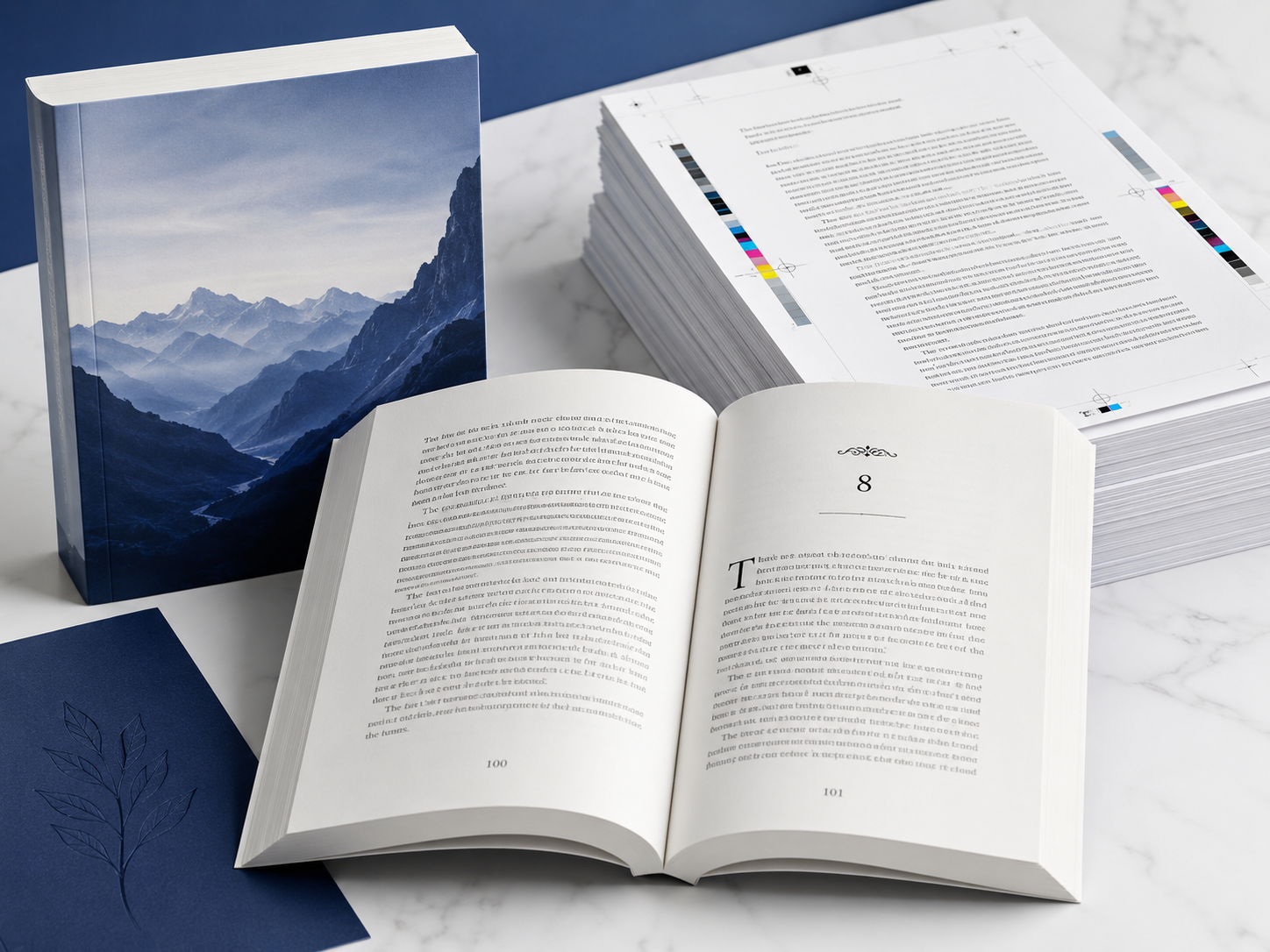
Transform your digital manuscript into a tactile masterpiece. We specialize in industry-standard paperback formatting—expertly managing trim sizes, gutter margins, and bleed settings—ensuring your book meets the highest publishing standards for a flawless look on every bookstore shelf.
Paperback formatting is the process of preparing your manuscript specifically for printed book production. It ensures that every page is properly structured and designed to fit the selected trim size while maintaining a clean and professional appearance.
The formatting process includes important details such as margins, typography, paragraph spacing, chapter openings, page numbers, headers, footers, and print-safe page layouts. These elements work together to create a consistent and comfortable reading experience throughout the book.
Professional paperback formatting also helps ensure that your manuscript is properly prepared for print-on-demand platforms and physical book production, giving your finished paperback a polished, publication-ready interior.
Every paperback deserves an interior that feels intentional, balanced, and comfortable to read. From chapter openings and typography to margins, spacing, headers, and page numbers, professional formatting gives your manuscript a polished, publication-ready finish.
A professionally formatted paperback begins with a clear visual structure. Carefully chosen fonts, balanced margins, and consistent paragraph spacing allow the reader to focus naturally on the story.
Every page should feel connected to the next, creating a smooth and comfortable reading experience throughout the book.
T ypography plays an important role in paperback design. Font size, line spacing, indentation, and page width all influence how comfortably a reader moves through the text.
Thoughtful spacing gives each page room to breathe while maintaining a professional and consistent appearance.
A professionally designed paperback uses consistent styles for chapter headings, body text, scene breaks, headers, footers, and page numbering.
This consistency gives the entire publication a cohesive identity and helps the finished book feel intentional from the opening page to the final chapter.
Paperback formatting considers the physical construction of the finished book. Inner and outer margins must be carefully adjusted so text remains comfortable to read after the pages are bound.
Trim size, gutter space, page dimensions, and print specifications are all taken into account before the final interior file is prepared.
Formatting is more than simply making a manuscript fit onto printed pages. The goal is to create an environment where the reader can become absorbed in the content.
Clear hierarchy, comfortable line lengths, controlled white space, and well-positioned chapter breaks all contribute to a more enjoyable reading experience.
P rofessional paperback formatting gives your book the polished appearance readers expect from traditionally produced publications.
Whether your manuscript is fiction, memoir, nonfiction, poetry, or another genre, the interior should complement the content while maintaining strong technical standards.
The result is a clean, organized, and publication-ready paperback that looks professional on every page.
A professionally formatted paperback gives your manuscript a clean, organized, and publication-ready appearance. Proper margins, typography, spacing, and page structure ensure that every page looks consistent and comfortable to read once your book is printed.